Hiring Foreign Workers: A Complementary Solution for Companies in Romania
In recent years, more and more companies in Romania have started to see hiring foreign workers as a real solution for filling positions that are difficult to cover.
However, this topic comes with an important question: are foreign workers a problem for the local labor market or a complementary solution for companies that can no longer find enough staff?
The answer must be viewed realistically. In most cases, companies do not turn to foreign workers to replace local employees, but to complete teams where the local labor market can no longer fully cover staffing needs.
This difference is essential. Hiring foreign workers should not be presented as a choice against the local workforce, but as a practical solution for companies facing staff shortages, vacant positions, turnover or difficulties in maintaining their work pace.
Why does the perception appear that foreign workers replace the local labor market?
The perception that foreign workers replace the local workforce often appears from an incomplete understanding of how recruitment works in companies.
In reality, most employers first look for candidates on the local labor market. They publish job ads, speak with applicants, organize interviews and try to fill available positions with staff from Romania.
The problem appears when these efforts do not bring enough candidates or when positions remain unfilled for long periods.
In such situations, international recruitment becomes an operational necessity. The company needs people to support its activity, meet deadlines and avoid blockages.
That is why the correct discussion is not about “Romanian workers versus foreign workers”, but about a company’s ability to find enough suitable people for its activity.
This perception often appears in discussions about international recruitment, especially when the subject is reduced to a few general ideas or to myths about recruiting workers from Asia.
In practice, each hiring decision must be analyzed based on the company’s real need, the available positions and the capacity of the local labor market to cover them.
What are companies actually looking for when they turn to international recruitment?
Companies that consider hiring foreign workers are not only looking to quickly fill some positions.
Most of the time, they are looking for predictability, continuity and a clear solution for staff shortages.
In operational sectors, the absence of staff does not affect only the human resources department. It can be seen directly in production, deliveries, deadlines, projects, services and the company’s ability to operate normally.
A company that constantly needs workers cannot build its activity on uncertainty. If positions remain vacant, if people leave quickly or if there are not enough available candidates, the company is forced to look for alternative solutions.
This is where international recruitment comes in, as an extension of recruitment options, not as a replacement for the local labor market.
Beyond the advantages of recruiting foreign workers, discussed separately, their role must be understood correctly: a complementary solution for companies that cannot fully cover their staffing needs from the local labor market.
Foreign workers complete teams where candidates are missing
The central idea is simple. Foreign workers can complete teams where companies cannot find enough available candidates locally.
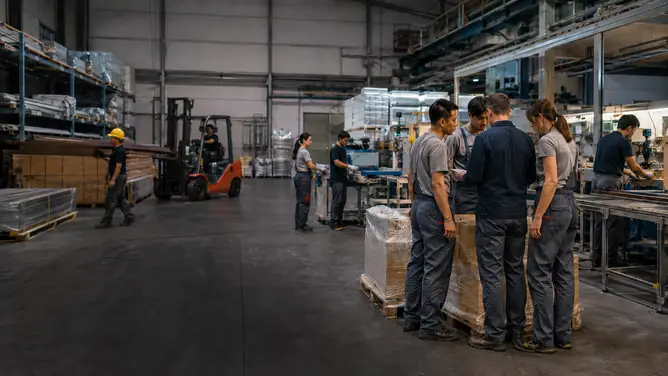
In many companies, local employees and foreign workers work together in mixed teams. The employer’s objective is not to replace one category with another, but to have enough people to support the workload.
This approach is especially important in sectors where there is a constant need for staff.
When a company has ongoing projects, orders to deliver or intense daily activity, the lack of people can quickly lead to delays and additional costs.
Therefore, foreign workers should be viewed as an additional resource for companies facing a real staff shortage.
In which sectors is the staff shortage felt the most?
The need to hire foreign workers appears especially in sectors where activity depends on operational roles and constant presence.
Among the sectors where companies frequently face staff shortages are:
- construction;
- production;
- logistics;
- HoReCa;
- agriculture;
- services;
- professional cleaning;
- warehouse activities;
- the food industry.
In these sectors, the lack of staff is not only an administrative problem. It can affect deadlines, service quality, delivery capacity and the relationship with clients or partners.
That is why, for many companies, hiring foreign workers becomes a solution for completing the team, especially when positions remain difficult to cover through local recruitment.
What does a company risk when it cannot cover vacant positions?
When a company cannot find enough staff, the effects are quickly felt in day-to-day activity.
First, delays appear. Projects may be postponed, orders may be delivered more slowly, and existing teams end up taking on a larger workload.
Second, the pressure on current employees increases. When a team is incomplete, existing employees are overloaded, which can lead to fatigue, lower motivation and additional turnover.
Third, the company may lose opportunities. If it does not have enough people, it may refuse projects, postpone expansions or lose contracts.
For this reason, staff shortage is not only a recruitment problem. It is a business problem. And hiring foreign workers can become a solution when the company needs continuity and operational capacity.
This pressure can also be seen in the dynamics of available positions: the vacant jobs communicated by employers through ANOFM show that the need for staff remains an active topic for the business environment.
Local recruitment and international recruitment do not exclude each other
Local recruitment and international recruitment should not be seen as opposite directions.
A company can continue to recruit locally and, at the same time, turn to foreign workers for positions that remain difficult to cover. This is a balanced approach, especially in sectors where staffing needs are constant.
Local recruitment remains important. However, when the local labor market cannot fully cover staffing needs, international recruitment can complete the team and reduce operational pressure.
For companies that are still trying to attract candidates from the local market, the way they build job ads that attract the right candidates also matters.
Still, when these efforts are not enough, international recruitment can become a complementary direction, not an alternative against the local labor market.
When is hiring foreign workers a suitable solution?
Hiring foreign workers can be a suitable solution when the company faces a clear and constant need for staff.
This option is worth analyzing especially when:
- positions remain vacant for long periods;
- local recruitment does not bring enough candidates;
- activity is affected by the lack of people;
- staff turnover puts pressure on the team;
- the company has projects or orders that require continuity;
- more stable human resources planning is needed.
The decision must be made responsibly. International recruitment is not only a quick solution for filling positions, but a process that must be properly prepared, from selection to integration.
What does responsible hiring of foreign workers mean?
Responsible hiring does not mean only identifying people who are available to work. It means a clear, legal process adapted to the company’s real needs.
For the employer, this process should include:
- correctly defining the positions;
- establishing the real number of people needed;
- careful candidate selection;
- document verification;
- compliance with legal procedures;
- clear communication of working conditions;
- support for integrating workers into the company.
The legal aspect is essential. In order for the process to be correct from the beginning, employers must take into account the legal conditions for hiring foreign workers, the necessary documents and the applicable procedure depending on the type of worker, position and recruitment method.
Starting with the new framework introduced by O.U.G. no. 32/2026 regarding foreigners’ access to the Romanian labor market, employers must pay more attention to how recruitment is organized: employer registration or authorization, collaboration with authorized placement agencies, firm job offers and the necessary documents become important elements of the process.
An important procedural reference remains the employment notice for foreign workers, which must be analyzed depending on the worker’s concrete situation, the targeted position and the applicable procedure.
At the same time, the new framework introduced by O.U.G. no. 32/2026 and the WorkinRomania.gov.ro platform show the direction in which the process is moving: more digitalization, traceability, transparency and responsibility.
The goal is not only to bring people. The goal is to bring the right people, under fair conditions, for a company that has a real staffing need.
This approach protects both the employer and the workers and contributes to a correct perception of international recruitment.
Frequently Asked Questions About Hiring Foreign Workers
Do foreign workers replace Romanian workers?
No. In most cases, foreign workers complete teams where companies cannot find enough local candidates available or suitable for certain positions.
Why do companies choose to hire foreign workers?
Companies choose to hire foreign workers when they need constant staff and local recruitment does not fully cover their needs.
It is a solution for continuity, not a choice against the local labor market.
In which sectors are foreign workers most often needed?
The need often appears in construction, production, logistics, HoReCa, agriculture, services, cleaning, warehouses and other operational activities.
When should a company consider international recruitment?
When positions remain vacant, activity is affected by staff shortages, the existing team is overloaded or the company needs continuity for projects and orders.
What companies should remember
Viewed as a whole, hiring foreign workers is not a solution separate from the local labor market, but a complement to it where companies have a real need for staff.
In many sectors, the challenge is not choosing between local candidates and foreign candidates, but finding a sufficient number of people so that activity can continue in a stable way.
When done correctly, international recruitment helps companies reduce operational pressure and maintain their work capacity.
What matters is that the process is treated responsibly, with careful selection, clear conditions and compliance with legal procedures.
For companies that have a real staffing need, foreign workers represent a complementary resource where the local labor market can no longer fully respond to existing demand.
Do you need to complete your team with stable staff? Prepare recruitment in advance.
We are currently in a transition period in which companies can begin candidate selection and prepare the documentation required for recruitment, while the procedures will continue after the operationalization of the WorkinRomania.gov.ro platform and the full implementation of the new requirements provided by O.U.G. no. 32/2026.